A Writer’s Guide to Receiving Critique

A couple of weeks ago I posted about giving critiques to fellow writers, and today we’re looking at the other side of the coin: receiving critique. Some of this may be some no brainer stuff, but it’s taken a few years of watching myself and other writers take critiques and different ways we do it well and some ways we do it very poorly for me to finally figure this out.

So let’s get this party started.
writers guide receiving critique 2.jpg

Before you send out your story…

Evaluate why you’re getting a critique.

For a while, I sent my stories out for “critique” to get a pat on the back. Of course, I would never (ever, ever, ever, ever, EVER) have said that aloud, and I never actually thought it in so many words… but my reactions to criticism betrayed me. My heart wanted people to love everything about my stories—which is normal, but in my heart, I also expected people to love everything about my stories.

Spoiler alert: that is not what a critique is about. At least, that’s not what it should be about. So before you send out your story, check your heart and unspoken motives to make certain you actually want to make your story better.

Be choosy about who you ask for a critique.

There are a few things to watch out for when deciding who to send a story to. First, don’t pull from only your peer group. If your writing equals are the only ones reading your story, the only level of excellence you will achieve is that of your peer group. No matter how long you’ve been writing or how much success you’ve seen, there is still so much you don’t know. To get the most out of a critique, it’s best to get the opinions of people from as many different backgrounds as possible so that you can get the most varied and in-depth feedback as possible.

Second, be careful to send to primarily (if not exclusively) trusted people who truly know and care about you and want you to grow and succeed. These people will give some of the most encouraging feedback, and they will be willing to say hard things gently in order to help you get better.

If all you ever hear from a certain critique partner is negative and proves unhelpful, stop sending them your stories. On the other hand, if all you ever hear from a critique partner is positive, excited feedback that strokes your ego but doesn’t challenge you, stop sending them your stories because they aren’t actually helping you.

After you get your story back…

If you’re upset by a critique, wait for your emotions to cool before replying; you want to respond, not react.

Alas, not all feedback is going to make you go over the moon. If it were, you would never grow. So, if/when you receive a critique that’s very upsetting, resist the urge to hop on your computer and rage at the person who gave the critique. No matter what they said about you or your story, you should never reply in the heat of emotion. There is no legitimate license for that anywhere in the world. Wait a few hours, or even days, if that’s what it takes for you to graciously reply.

Resist the urge to debate them about the critique.

This principle rules out passive aggressively telling your critique partner they’re wrong. They may be; they may not be. Regardless, don’t critique their critique. Friends, little will make your critique partners want to never agree to read and give feedback for you ever again like a response that insists—either overtly or subtly—that they don’t know what they’re talking about or they’re the only person who thinks that way. Such replies reek of disrespect and arrogance which stir up unnecessary strife between you and your critique partner.

Usually, the best way to respectfully disagree is the silent way since writing is not something worth serious conflict.

Remember why you’re getting a critique.

If you’re having a hard time swallowing a critique, it’s time to revisit why you sent your story out to get critiqued in the first place.

This is your story.

Now, receiving a critique with grace and humility does not mean you take every suggestion and negative comment to heart. First, remember that feedback will often conflict, so it would be impossible to make every change. Second, your job as a storyteller is not to produce something that makes everyone happy. Your job as a storyteller is to craft the strongest story you can. Take the feedback that helps you do that and throw out the rest.

Value your critique partners, especially the ones who give constructive criticism.

My brother Caleb is one of my favorite critique people. He’s not a creative writer by trade, but he knows stories so much better than I do and always has good input. Buuuuuuut, I kind of have to brace myself whenever I’m reading his critiques, not because he’s mean or anything like that but because he’s very clinical in his comments. Reading his thoughts is like pouring alcohol on a cut—it stings, but I know it’s going to go a long way in strengthening my story.

It’s been some of his suggestions on The Necklace and Our Family that changed them the most for the better (he’s the one who helped me out of the deep, dark early drafts of Our Family). I know I can trust him because he loves me and is always pushing me to grow and change for the better.

So when it comes to your critique partners, value you them and make sure they know that you value them.

Thank them. A lot. Like, a lot, a lot. Don’t forget that it takes time to read, digest, and then give feedback on a story, so thank them for their time and their thoughts. I don’t thank my critique partners enough, and I don’t believe we can be too grateful.


That’s all I’ve got for today, kids!

Here’s a huge shout out to my go-to critique partners: Daddy (the first to lay eyes on any of my stories), Caleb (the super wise dude), and Katie (basically the epitome of the balanced critique partner). <3 Thank you guys so much for all the times you’ve read bits of flash fiction and gotten back to me when I frantically send it in to you in the eleventh hour. Without you, The Necklace and Our Family wouldn’t be out in the world today.

With love,

Rosalie
P.S. – Do you have anything to add to this post? Anything you disagree with? What’s up for you this fine Monday??

When Hope Is Gone

I shared in this post a little bit of my struggle with hope recently, and we’re going to explore the battle for/with hope in today’s post.

However, I do want to say from the outset that this is not a post about depression—at least not the go-to-counseling, take-some-medication, etc. kind of depression. This is more about the situational depression that most—if not all—Christians will face at least once in their life, the times when hope is gone.

when hope is gone.jpg

As Christians, our lives are based on hope—hope in our Christ, hope for the future given to us by our Christ, hope despite the world of death we live in. Our hope is our confidence in Christ, our trust that He is who He said He is, that He’ll do what He said He will, and that in the end, we will be with Him.

But sometimes our hope can falter or collapse altogether. These are the seasons when our hope for the present time is deferred, and our hearts get sick. We get caught in a situation that beats the confidence right out of us—not the confidence that it will all be okay in the end but the confidence that we can make it through tomorrow.

Pain dims our vision, and it makes it seem like Jesus and all His triumph are so far away, too far away. We know in our heads that God is good. We know in our heads that this mess will end up for our good, eventually. We know in our heads that it will be all right, that God is righteous and kind and trustworthy.

Countless situations wring the hope right out of us. The death of a friend. The unfaithfulness of a spouse. The indifference of a child who’s walked away from God. The church that tears itself—you included—apart. The job that’s draining the lifeblood out of you. The storms that just. won’t. end.

The longer a trial goes on, the harder it is to walk through it with hope, and each of us has a breaking point, the point where pain gets to be too much, the point where we reach for hope and it’s just gone, completely out of reach.

I wish I could give five steps to reclaim hope, but it’s not that simple.

It’s never simple when you try to pray but you can only sit in silence or cry at God. It’s never simple when you’re sobbing four different times in one day. It’s never simple when you try to worship but you can’t lift your head past your hurt. It’s never simple when you need to talk about it but you don’t know how.

It’s never simple when you call out to God and beg for good things, things that are in His Word, things that seem like they would bring Him glory, things that seem like they would be His will, and He says “no” again and again and again and again and again until you don’t know what to pray for.

But hope is never truly gone, and that is what we have to remember.

Hope is never truly gone because God is never gone. Yes, it can feel like He’s far away, but He’s not. Yes, sometimes we have no way of knowing when it will get better—or even if it will get better—but someday it will, even if that day isn’t until we go meet Jesus in the clouds.

Yes, eternity can seem like it’s a lifetime away and the present can be like a millstone, but our hope cannot be fixed in the present. We are a people crafted for an eternity with God. We are a people set apart as priests and prophets and exiles always looking toward our home.

Recently, this was hard truth for me to swallow. I wanted hope for now, but instant hope is flimsy hope. I learned that Jesus alone must be enough, and that He is enough because He is all that is sure and steady in life.

When I came to the end of my hope and I sat on the floor trying to pray while I cried, I encountered comfort from the Holy Spirit. At the end of my strength, He had more than enough. When I wasn’t sure when life would get better, that was all right because He’s promised that eternal life will be better than my wildest imaginings. When my faith and hope gave way, there was an ocean of grace for me to fall into. When I failed, He did not.

And He’s where I fix my hope.

Whenever I come up short, in any way that I come up short, He has plenty.

So when your hope is gone, keep your eyes open. Wrestle with God. Look into eternity. Don’t believe the lies your heart tells you; what you feel does not change what’s true. Weep and mourn when you must. Keep moving with endurance. Remember that God is infinite and far too high for us to always see how He’s working it for good. Read and reread Hebrews—it’s all about faith and hope. Learn to sing when there’s no light at the end of the tunnel.

Hold fast to your confidence in Christ. Don’t lose heart. Don’t give up. With God, hope is never truly gone. Our Prize is far too valuable to give up now.

With love,

Rosalie

P.S. – thank you to all of you who gave encouragement when I first mentioned my struggles with hope a few weeks ago, especially Gabby and Moya. <3

P.P.S. – this is such a huge subject, and I hardly went into WHY we cannot give up or faith’s relationship with hope, so if you guys are interested, we might be exploring this a little more in the coming year.

A Writer’s Guide to Giving Critique

Here’s a post to all my fellow writers who stop in at Penprints.

After giving and receiving many critiques, I’ve put together this small (and incomplete) guide to giving another writer a critique on their story.

Let’s get started.

giving critique 2.jpg

Basics guidelines for giving critiques.

Begin and end your critique with the things you like. This is called an encouragement sandwich (I can’t remember who first came up with this metaphor…)—keep your criticisms sandwiched between two slices of all the things you like.

Personally, I have found this to be one of the best ways to deliver a critique because the first flavor is yummy—some things that are good about the story—,the second taste is bit more difficult to swallow since it’s some things that need work, and the last thing that’s felt is some more things that were done well. This helps the writer not be discouraged by the criticisms and suggestions in the middle.

Be careful with your wording.

Much of writing is subjective, so try to communicate that in the phrasing you use. You don’t want to give commands or deliver edicts; suggestions and questions are much more palatable. Use words like “perhaps” and “maybe” because it helps communicate that there isn’t one right way to do it and keeps the writer’s mind open.

Also, think more along the lines of the story and you rather than things the writer did “wrong”.

Instead of saying something like: “You didn’t describe this very well”, say something like this: “I’m having a hard time visualizing this. Maybe add in a bit more description and see if it sounds good.” Or something like that. The reason for this is that it comes across less like you’re attacking the writer and his/her writing and more like you want the story to carry author’s vision into the mind of readers.

Specificity is our friend, and vague-ish-ness…ish is our nemesis. When you like something, share why you like it. When something rubs you wrong, try to pinpoint what it was about it that didn’t sit well/you didn’t like.

Saying “I like this” is encouraging but uninspiring because the writer doesn’t know what about the description or the scene or the character grabbed the reader. And saying “I don’t like this” is discouraging and unhelpful because it tells the writer something is wrong but gives them no idea what about the scene or character isn’t shining for the reader.

Helpful mindsets for giving critiques.

Flattery is not helpful. Reserve your high praise for things you actually think are worthy of lavish high praise. If something is just all right, don’t say it’s amazing. If you don’t love something, don’t say you do to make the writer feel good. Don’t say what you think the other writer wants to hear.

As a critique partners, our job is not to make our writer friends feel good. Flattery—excessive, insincere compliments—only serves to give the writer false encouragement and cheapen the praise given by the flatterer.

I’m not saying don’t encourage because I’m a firm believer in giving encouragement like crazy; I’m saying don’t give encouragement where it isn’t due.

Be honest… even when it stings. Many times, I’ve gone over the moon for a story or a book by a friend and exploded with all my happy, excited thoughts and feelings, and it’s really easy to share what I think because I adore the story.

Spoiler alert: not every story is going to be easy like that.

Recently, being honest about my thoughts on a friend’s story was really, really hard because there were lots of things I didn’t like—way more things that I didn’t like than I did like. I dreaded writing out my final thoughts on the story for days because I knew she wouldn’t like what I had to say. I knew I wouldn’t like what I thought of it if it was my story. I wrestled with that critique—writing and rewriting it again and again because so much of it was negative. In the end, I was honest as gently as I could be. I still didn’t like it, and neither did she.

As far as being brutally honest goes, soften it as much as you can. Deliver the criticisms in the way that you would like someone to share their difficult/negative thoughts about your story with you. Treat them as you would like to be treated.

Remember that people won’t always like/agree with your opinion. Keep in mind that it is your opinion. It isn’t necessarily the right one, and you can be sure you mention that in your critique and do everything possible to soften—and even negate—the hard things you may say in your critique, and people might/will still get upset. That’s okay. It’s hard, but it’s okay.

A good friend says the hard things gently from a far purer heart than the flatterer who showers cheap praise.  

But also keep in mind that your criticisms could be wrong/baseless. You could be in the minority with your concerns and critiques. So don’t think too much of yourself and your thoughts that you can’t accept, not only that you might be wrong sometimes in the critiques you give, but that there will be times when you are flat out wrong in the critiques you give (because art is subjective and fun like that).

If your goal isn’t to enjoy the story and help the writer and the story grow, you’re doing it wrong. If your motives are off, your critique will be off. Never go into a critique with the mindset that you are going to teach this writer a thing or two or that they have so much to learn from your wisdom. Don’t try to inflict your style/voice onto the other writer. Conversely, critique isn’t about just patting the writer on the back.

Help and encourage out of a heart whose goal is to help and encourage.

Have you given a critique before? What did I miss in this small (and incomplete) guide to giving a critique?

With love,

Rosalie

P.S. – I kind of feel like this post was a lot of “don’t!”, but I currently lack the brainpower to spin this post into a more positive light.

P.P.S. – There will be a follow up post the week after next about receiving critiques.

8 Songs for Hope

I wanted to do a post about finding hope when hope is gone this week, but I’m not ready for it.

For the past month I’ve been embroiled in the most difficult fight for hope and joy I’ve had so far. It was never about not having hope and assurance in eternity… it’s just that heaven and forever and Jesus seem so far away sometimes.

There are lots of things rolling around in my head and heart–things I’ve learned for the first time and things I’ve had to relearn. I want to offer a helpful, encouraging post to others who can’t see the hope in the dark right now–and I probably will someday–but for now I can’t. I still have to sort through some things first.

Instead, I’m sharing some songs that have helped me (the story of my life is basically throwing a book or a song at my problems).

(Also, I’ve been tracking I Am They for the last week as they’ve released songs from their new album “Trial and Triumph”, so it’s kind of an I Am They post (and when the album is titled “Trial and Triumph” you know it’s basically all about hope)).

songs for hope.jpg

No Impossible With You by I Am They.

Right now I’m staring down a giant,
Right now I can’t see past my pain,
And right now my songs have turned to silence,
And You’ve never seemed so far away.

But I still believe,
I still believe.

There’s no heart You can’t rescue,
No war You can’t win,
No story so over it can’t start again,
No pain You won’t use,
No wall You won’t break through,
It might be too much for me… but
There is no impossible with You.

Find the whole song here.

God of All My Days by Casting Crowns.

Each step I take,
You make a way,
And I will give You all my praise,
My seasons change, You stay the same,
You’re the God of all my days,

In my worry, God, You are my stillness,
In my searching, God, You are my answers,
In my blindness, God, You are my vision,
In my bondage, God, You are my freedom,
In my weakness, God, You are my power,
You’re the reason that I sing,
‘Cause You’re the God of all my days.

Find the whole song here.

Scars by I Am They.

Darkest water and deepest pain,
I wouldn’t trade it for anything,
‘Cause my brokenness brought me to You,
And these wounds are a story You’ll use.

So I’m thankful for the scars,
‘Cause without them I wouldn’t know Your heart,
And I know they’ll always tell of who You are,
So forever I am thankful for the scars.

Find the whole song here.

Christ the Sure and Steady Anchor by Matt Boswell.

Christ the sure and steady anchor,
In the fury of the storm;
When the winds of doubt blow through me, and my sails have all been torn.
In the suffering, in the sorrow,
When my sinking hopes are few;
I will hold fast to the anchor,
It will never be removed.

Christ the sure and steady anchor,
As we face the wave of death;
When these trials give way to glory,
As we draw our final breath.
We will cross that great horizon,
Clouds behind and life secure;
And the calm will be the better,
For the storms that we endure.

Find the whole song here.

Every Giant Will Fall by Rend Collective.

There is hope within the fight,
In the wars that rage inside,
Though the shadows steal the light,
Your love is my battle cry,
The anthem for all my life.

Every giant will fall, the mountains will move,
Every chain of the past, You’ve broken in two,
Over fear, over lies, we’re singing the truth,
That nothing is impossible.

Find the whole song here.

Shoulders by For King and Country.

You mend what once was shattered,
And You turn my tears to laughter,
Your forgiveness is my fortress,
Oh Your mercy is relentless.

My help comes from You,
You’re right here, pulling me through,
You carry my weakness, my sickness, my brokenness all on Your shoulders,
Your shoulders,
My help comes from You,
You are my rest, my rescue,
I don’t have to see to believe that You’re lifting me up on Your shoulders,
Your shoulders.

Find the whole song here.

Move (Keep Walkin’) by TobyMac.

I know your heart been broke again,
I know your prayers ain’t been answered yet,
I know you’re feeling like you got nothing left,
Well, lift your head, it ain’t over yet, ain’t over yet so…

Move, keep walkin’ soldier keep movin’ on,
Move, keep walkin’ until the mornin’ comes,
Move, keep walkin’ soldier keep movin’ on,
And lift your head, it ain’t over yet, ain’t over yet.

Find the whole song here.

The Water (Meant for Me) by I Am They.

There is power, victory,
Hope for the broken-hearted,
Healing meant for me,
There is goodness, justice,
Rest for the weak and weary,
Love that’s meant for me.

This far, He has lead us,
Through the darkness to the light of day,
This far, He has shown us,
Love and mercy and unfailing grace,
When my hope is lost in the shadows,
This promise, You have made,
It’s not far, not far.

Find the whole song here.


That’s all I got for today, kids!

Have you heard any of these songs? Which is your favorite?

With love,

Rosalie

P.S. – I Am They, amiright? ;)

A Love Letter to the Tales of Goldstone Wood [yeah, it’s a fangirl post]

I first heard about the Tales of Goldstone Wood while with my cousins eight years ago. Brittany, my eldest cousin, showed me a beautiful book she had picked up for just a few dollars at a little bookstore. It had one of the loveliest covers I had ever seen. It was titled Heartless, and it was written by Anne Elisabeth Stengl.

It is the first book in the Tales of Goldstone Wood series, and it is my childhood. (Warning: this is a major nostalgic fangirl post with so many references that many won’t understand…. but I really don’t care. #sorrynotsorry)

love letter 1.jpg

I’ve always enjoyed fantasy, living off of The Lord of the Rings and The Chronicles of Narnia for as long as I can remember, but The Tales of Goldstone Wood took that love to a new level.

I read Heartless three times before Veiled Rose was released (Heartless was published in 2010, and Veiled Rose came out in 2011…). I devoured Veiled Rose and then Moonblood, but whatever expectations I had for the series could not prepare me for what came next. Starflower and Dragonwitch completely outdid everything that had come before them.

The books just. kept. getting. better.

goldstone 1.jpgGoddess Tithe, the first novella, was released on the heels of Dragonwitch, taking breath away yet again. When the opportunity arose, I signed up for the cover reveal for Shadow Hand, completely delighted that I could participate.
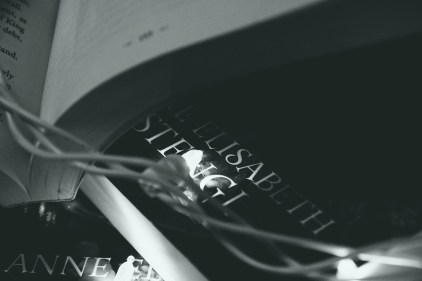
Bits and pieces about Golden Daughter were dropped, then came the cover and the buzz about how long it was (584 packed pages). Then Draven’s Light, a huge “novella” fitting the hugeness of the series, was released. I cried while reading it. Repeatedly.

The depth and richness of everything in the Tales of Goldstone Wood is incomparable. There are many excellent modern fantasy novels, but the Tales of Goldstone Wood series towers over all of them. There are so many good fantasy stories out there, but The Tales of Goldstone Wood dominates on every level.

So much can be said about the world(s) captured in the series–the cultures and kingdoms and histories. The lordly sun and the lady moon. The glory and purity of the starry sky. The Faerie kings and queens with their three lives. The halls of the Merry People and the throne room of the goblin queen. Rivers and all their craftiness. The Dragon and his kiss. The Knights of Farthest Shore and the Lumil Eliasul. Much can also be said about the stories with all their complexity and twists and the threads that trace through them—the wild fun and the wild danger.

But the world would be only interesting and the stories would be only adventures if it weren’t for the characters. The characters are what make these books more than just stories. I don’t know if I’ll ever get over the people that leaped off the page and commanded attention and affection, each one unique and so so so so real.

stengl 1I never much cared for the Chronicler or Leta—probably because I’m very partial to Alistair and didn’t like that they didn’t see or appreciate his greatness—but the Brothers Ashiun stole my heart, their story devastating me every time I read it. Somehow, I came to adore even the Flame at Night with all her fire, hatreds, lies, and brokenness.

Not many people loved Una, but she was dear to me even with all her selfish whining. Felix, that dastardly little fiend of brother, has never stopped making me laugh, and watching Leo grow from the boy-prince into manhood with much trial and error is still one of my favorite things.

I wasn’t a fan of Daylily and Foxbrush, but that’s probably because I’m very, very partial to Leo, Rose Red, and Una (it’s like a love pentagon).

Draven’s courage and Ita’s resolve will never not give me tears and chills. I haven’t met Sairu yet, but from what I’ve heard, I think I’ll like her. The Panther Master broke my heart, and I sorely miss Sun Eagle.

Imraldera, the sweet, brave Starflower; oh, how she taught me compassion. And words cannot express the place Eanrin has in my heart, the most cat-ish poet to ever grace the page, so fierce and noble and unexpected in every way.

For whatever reason, I stopped reading the Tales of Goldstone Wood a few years ago, but then Anne Elisabeth Stengl announced that she won’t be writing any more of them.

So I went back to my shelf and stared at the books, feeling strangely, deeply sad. Heartless, Starflower, and Dragonwitch are on my special Favorites of All Time shelf. Golden Daughter sits on my To Be Read shelves. The others are gathered together on their own shelf, and I decided it’s time to revisit all the beloved places and reacquaint myself with all the beloved people.

This time, I’m reading them in chronological order—the order they take place, not the order they were published. Starflower has already reclaimed its place in my heart, and I’m nearly finished with Dragonwitch, dying over Eanrin, Imraldera, Hri Sora, Etanun, Mouse, and Alistair all over again.

I know not everyone who reads Penprints will “get” this post, but it’s been a long time coming. The Tales of Goldstone Wood are a prime example of the power and beauty of stories. They are pure, beautiful, and everything stories should be.

It’s strange how they only get better the more I read them, how sad and happy they make me at the same time, how much I’ve learned from them about people and life and myself and God, how deeply they delight and compel at the same time.

What stories made up your childhood? Have you read any Tales of Goldstone Wood? Do you have a favorite?

With love,

Rosalie

P.S. – I may not post next week. We’ll see. If I do, should I post about hope when hope is gone or the importance of growing up.

P.P.S. – I realize that as a love letter, this should probably have been addressed to the series instead of just talking about the series, but I thought talking to a stack of books might be a little odd. So I figured I had better just talk about them as if they were real since that’s less weird. ;)