Finishing Draft Three {somehow an excuse to post baby animal pictures}

Peeps, I did it.

I finished Draft Three (aka: The Draft That Wants to Kill Me) of Beasts. And I did it without dying, so I feel like I should get extra points for that.

And I’ve recovered ALL of my files from my dearly departed laptop due to the tireless efforts from some of my amazing church family members (needless to say, there was much relief and thanking God). Also, I kind of owe a life-debt to the people involved with the finding and preserving of said files.

Instead of telling you about Beasts itself (because that would make sense), I’m going to tell you how the last week of my life was like trying to finish this beast (oh, see what I did there?).

finishing-draft-three.jpg

To put it frankly, this draft was really hard.

Here’s a bit of backstory: Draft One was written back in 2015, and let me tell you, it was awful (is “plotless” one word or two?). A marginally better Draft Two came out in 2016, but I don’t like to speak of that draft.

Draft Three is where all the heavy lifting happened. I took about 5,000 words from Draft One, maybe 8,000 words from Draft Two, and then I scrapped the rest (yeah, that was tough). Work on Draft Three lasted six months, and all that work boiled down to this past week when I faced a hard deadline.

The Story of How I Got a Hard Deadline:

Me to me: You can’t watch Beauty and the Beast until you finish Draft Three.

Me: What? You wouldn’t?

Me to me: Wanna bet?

Then I came up against The Face of Great Distraction.

The Face of Great Distraction:
SONY DSC

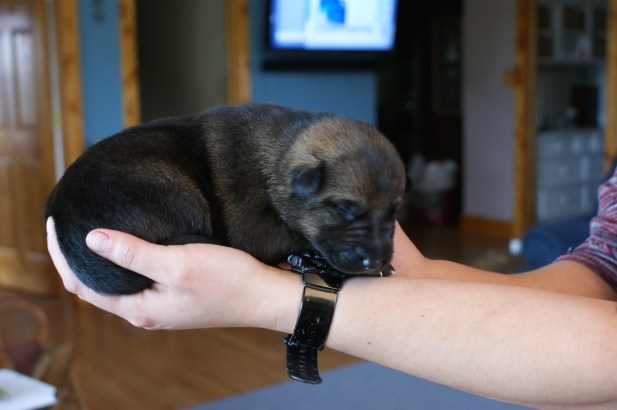
“Hi! I’m a week old, and I have a sister and five brothers, and we’re all really adorable and make such adorable sounds, and you should love on us instead of work on your novel.” — actual words this puppy said to me.
DSC04864.JPG

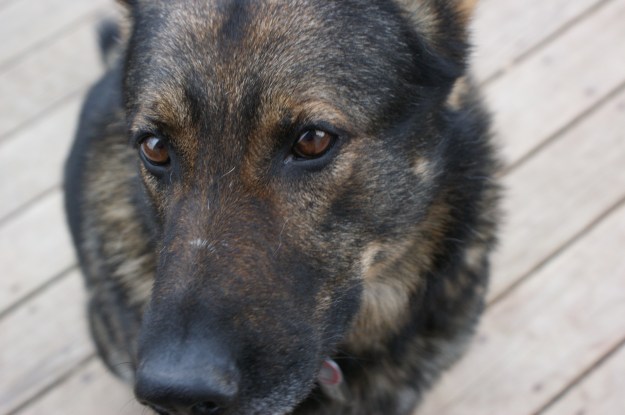
“Hey, I’m very needy. You need to pet me and pay attention to me and give me treats and talk to me or else I’ll be forced to jump on you to make sure you know I exist.” — Bear every single time I try to be productive.
DSC04922.JPG

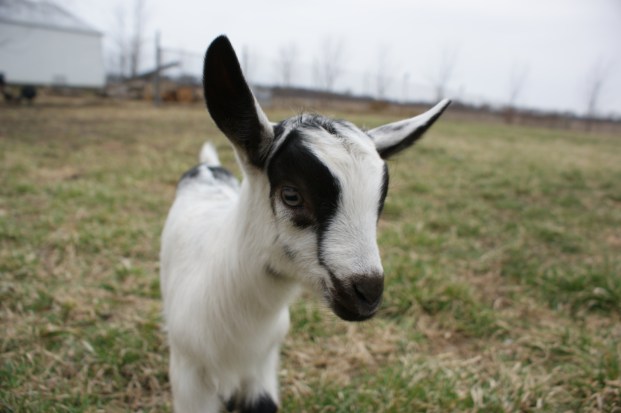
“I’m Boots, just an adorable goat kid with four kid cousins, and you must come see me and let me chew on your clothes and climb in your lap and dance around in goat kid happiness.” — Boots the goat kid every. single. day.

DSC04928.JPG

And let’s not forget My Precious.

I knew I was avoiding my novel when Graham said to me: “Rosalie, I’ve been stalking this mouse hole for three days now. You should help me hunt this tasty morsel.”

But instead of saying: “Graham, you don’t speak English, and I have to finish this draft,” like a normal person would, I said: “Oh, great idea, Precious! I’ll bring coffee and my BB gun, and it’ll be just like old times when you were a kitten!”

After two hours of our stakeout, I had to face the reality that it was all in my head and that I needed to get back to finishing Draft Three. That’s when My Precious gave me this look:

DSC04934.JPG

Um, this face. :O

Okay, I did not spend two hours on a stakeout with Graham, but let me tell you I THOUGHT ABOUT IT.

But, guys, in The Face of Great Distraction, I prevailed.

It was making coffee at 9:30 pm some nights to fuel me for a night of writing. It was getting up at 4:00 am (aka: Stupid Early) to write before work some mornings. It was coming up against all kinds of fear and hate for my story and writing anyway.

It was reviewing my outline and throwing out what no longer seemed to work. It was word wars with lovely writing friends (a shout out to Brittany, Katie, and Nadine). It was taking a break to write a flash fiction and then coming back to my novel after a week with fresh drive.

It was my sister asking “Are you going to write?”. It was sharing my wordcounts with my dad and him cheering me on. It was my mom telling me some nights that I needed to sleep instead of write because I really needed the rest and my writing would be better for it.

It was praying for God’s hand in this story more every day. It was realizing that since He’s given me the green light, I need to go, no more indecision, no more fear.

It was hard, and my novel still needs a lot more work.

There are still several more drafts to come, but it’s finally starting to look like a story. When I read it next week, it’ll probably be awful, but it’s so much better than it was.

The Draft That Wants to Kill Me is finished.

It came to just over 93,000 words (a number I hope will shrink with more editing), 33 chapters, and an epilogue.

And for those of you who have made it to the end of this babbling post, here’s an aesthetic board and then the premise of Beasts (so I guess I’m telling you a little about Beasts after all…).

beasts collage.jpg

I own none of these pictures.

Premise: a retelling of Beauty and the Beast told in the words of the witch who cursed the Beast.

Let’s chat, peeps. What are your struggles with your WIP? What part of the writing process are you in right now? What are the faces of your distractions?

With love,

Rosalie

P.S. – seriously though, guys, Graham’s face in that last picture causes me some concern.

The Truth About Stress

I’m a bit stressed right now (translation: I’m a lot stressed right now).

Mainly because I have a deadline for Beasts (my novel WIP, just so you new kids know), and I still have a disgustingly huge amount of work left to do on it… like finish Draft Three (aka: The Draft That Wants to Kill Me), do a quickie Draft Four (to fix Draft Three’s issues and kill off a few more characters), give it to my alpha readers, evaluate and apply their feedback, and then send it off to my editor… all before the end of April (my dear editor, if you’re reading this, now you know that when I said I’d give it to you “April-ish” it really meant “the end of April”).

Oh, and there’s the bit about how my computer decided to depart from this world… and I haven’t backed it up since December (DECEMBER). And the flash drive I used to back up all my documents in December (that’s three whole months ago for those of us who struggle with math) is winning a game of hide and seek (that means I can’t find it). And we’re not even 100% sure that I’ll be able to recover my files—including 80% of The Draft That Wants to Kill Me—from my now dead laptop.

So here I am with an eye-twitch and an excess of cortisol (that’s a stress hormone for those of us who weren’t sure). I don’t lead a ultra-stressful life, but recently, I’ve been stressed (trust me, I know it’s my own fault). So, I want to chat with you lovelies about stress (who wants to see how many times I can use the word “stress” in one post?).

truth-stress.jpg

First things first:

Stress is not a bad thing.

I know, I know. You’re thinking, “Say what now, Rosalie? I’m pretty sure the ulcer I’ve got is a bad thing.” Okay, so ulcers are no bueno, but that aside, let’s take a closer look at some different kinds of stress because it’s not one dimensional.

dream bigger 1.gif

this is quite possibly my favorite gif of ever; expect frequent use of said gif.

First, we just have good ol’ Stress: physical, mental, or emotional strain or tension.

Then we have Distress: great pain, anxiety, or sorrow; acute physical or mental suffering; affliction; trouble; to be subject to pressure, stress, or strain; embarrass or exhaust by strain.

Now, before you say: “Aha! Stress=bad, Rosalie!”, let’s look at one more kind of stress. Eustress: stress that is deemed healthful or giving one a feeling of fulfillment. If you look at the roots of eustress, you’ll find that it literally means Good Stress. Boom.

Guys, stress isn’t always bad because it can be useful.

Stress pushes us to grow in so many ways. Right now, stress is pushing me to write every single day (because I kind of hate my story right now and wonder if it will ever get to a place where I’m happy with it and I don’t want to look at it or think about it so I’d rather not work on it because I hate it #fulldisclosure). Stress is pushing me to be more intentional with how I manage my time (i.e. – cutting out the excess and figuring out what can wait and what can’t). Stress is pushing me to grow up and say no to some things. Stress is pushing me to evaluate what things are most important (i.e. – relationships=most important; painting=less important). Because I’m stressed, I’m growing and maturing more quickly than I do when I’m comfortable.


So stress can serve a galvanizing purpose, but it can also be awfully distressing (see what I did there?). Here are the things that have helped me deal with stress.

Pray.

This is a no-brainer, but apparently I don’t have a brain half the time since this is one that I struggle to remember. Listen up, peeps: God is altogether divine, unthinkably vast, and wholly inscrutable, and yet He is interested in us and our problems—no matter how petty or dire. In all His supreme significance (there would be nothing without Him), He chooses to look down on all of our insignificance and care. And that, friends, is a mind-blowing reality.

So take your stress and give it to Him. Go before Him and explain your frustration and angst. I’ve found it’s an oddly humbling thing to tell God, not only that you’re stressed, but also why. Share your heart with Him. Ask for peace. Ask for energy. Ask for wisdom. Most importantly, ask Him to use your stress to somehow bring Him glory and bring about His will in your life.

Work the problem and set a deadline.

This is where you take a step back and evaluate your situation. This is where you strategize and lay out a plan to complete the task(s) that are the sources of the most stress.

For instance, I’ve had to look at The Draft That Wants to Kill Me and set a ballpark of how many words are left in the story to be written. After I got a general idea of how much story is left (it’s too much, guys), I figured out how much I have to write every day to finish this draft in time to get all the other work done on this novel before I send it to my editor. Also, I set a deadline. It was last Friday, but the laptop said bye-bye and delayed things. So instead of a date this time, I decided that I can’t see the new Beauty and the Beast movie until I finish this draft. I don’t know if I’ve ever been so motivated.

So come up with a plan, set a deadline of sorts, and do it.

Take small bites.

I’m not talking about food here, people (though I think we all kind of wish I was). I’m talking about being realistic and not overwhelming yourself. My tendency is to look at the source of my stress, decide it can’t possibly be done because there’s soooooo much to do, and then promptly shut down (usually with much wailing and gnashing of teeth). This. cannot. happen.

Don’t look at all the work you have left to do; look at what you can do today. Stay in the now. If you look too far ahead, you’ll get yourself tangled up in distress. Focus on what has to happen today and leverage the eustress.

Take calculated breaks.

This is not license to get tired of working on your project (or whatever it is) and then go cruise around Pinterest for three and a half hours. This does not mean that you should work for five hours and then take five for a snack.

This means work for 25 minutes, take a ten minute break, and then work for another 25 minutes (or something along those lines). Plan when you get your breaks and then set a timer when they start so that you don’t go over on your time.

Do something you find relaxing for your break. Go for a quick walk. Strum your ukulele. Do some stretches. Be a psycho and do a high interval workout. Drink a glass of water. Cuddle with your cat. Read a chapter in a book. Whatever it is you do for fun/relaxation, do it briefly as a break from your project.

Oh, and for the love of all that is good, don’t procrastinate.

Procrastination is usually the reason I end up stressed in the first place. I put off whatever project it is until it becomes impossible (in my mind) to complete, and then I shut down and procrastinate more.

Please don’t procrastinate. Procrastinating when stressed is like giving your rabbit caffeine (Out of Time series reference, yo); it only makes things worse. Much worse.

Check your attitude and watch your mouth.

When one (ahem, you and me) is stressed, it’s easy to snap at people and then justify it because one (you and me) is sooooooo stressed. Excuse me while I tune my violin and find some cheese to go with the whine. I’m so painfully guilty when it comes to this. For some reason, I think I get a free pass for being unkind or short because I’m stressed.

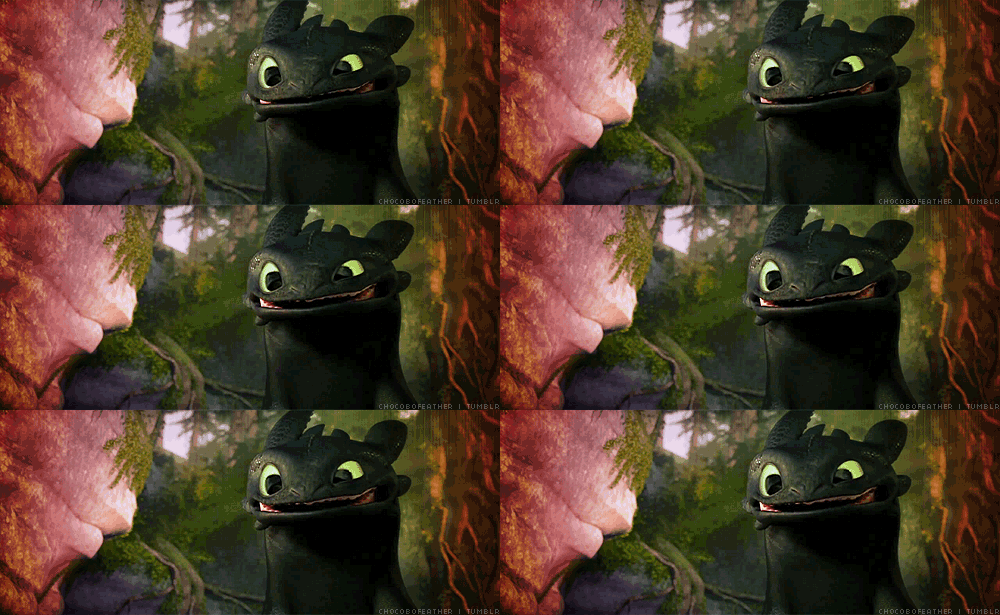
toothless 2.gif

when stressed, I am Toothless from this gif

Spoiler alert: we don’t get off free and clear for being waspish because we’re stressed. Don’t blame other people for your stress. Sure, it may be their “fault” if you look at it from a certain light, so don’t look at it in that light.

Take ownership for your stress. Take ownership for your attitude. Take ownership for the words that come out of your mouth. Don’t let your strained emotions rule your mind or your mouth.

toothless 3.gif

when stressed, choose to be Toothless from this gif


Now I need to get back to being stressed about my novel (I’m thinking eustress thoughts).

What do you do when you get stressed? Do you get stressed (if not, spill all your wonderful secrets in the comments so that we peasants may learn from you)? What things stress you out?

With love,

Rosalie <3

P.S. – profuse apologies to all you lovelies who have taken the time to comment on my last two posts. I’ve read (and reread and deeply appreciate) your comments and will be replying forthwith.

P.P.S. – did anyone count how many times I used the word “stress”? I think it’s somewhere around a lot.

Why I Make Music a Part of My Devotions

In a previous post, I mentioned that I sing songs during my personal devotions, and this week is about why I’ve made music a part of my quiet time.

music-devotions.jpg

Music is a gift given to help us communicate deep thoughts and truths that we otherwise struggle to grasp or say, and music written for worship is a way to give God praise, to use our breath and our being to exalt the Most High. Songs are prayers set to melodies, outpourings of the human soul before the throne of the living God.

Music is beautiful.

I believe that music has power, and I believe that the Holy Spirit uses music to move and thaw hearts. He uses it to help me come close when my mind is scattered or my soul is raw with griefs or desires I can’t find words to express. He uses it to draw me into deeper love and wonder and humility and new understanding of the magnitude of what He’s done for me, how far I once was, how close I now am, and how much closer I can get to Him.

And when it comes to meeting with God alone, how can I not sing? How can I not give Him a joyful noise? When I’m able to go boldly before Him, how can I not use that boldness to give Him a freewill offering of praise?

I don’t think that quiet time with God is only about learning of the God Who knows no equal; quiet time with God is about coming to Him with intentionality and humility and prayer and praise with the purpose of glorifying Him.

Yes, devotions are about knowing Him as intimately as I can and taking what I know and living like I actually know it, but that isn’t all there is to it. The whole reason anything in all creation even exists is to glorify God, to give Him praise. Period. That’s it. And yes, my entire life is to be an act of worship, but when given the opportunity to lift my voice and glorify my matchless God one-on-One, when it’s just Him and me, why wouldn’t I take it?

I try to keep my music well-balanced with my prayer and study time, and I have found that beginning with some prayer and then a couple songs sets a tone of adoration for the entire time so that my heart is as engaged as my head.

How I use music depends on the day. Sometimes I grab my iPod and listen/listen and sing a few songs. Sometimes I simply pray the lyrics of a song. Sometimes I sing acapella. Sometimes I grab one of my ukuleles and play softly (though, sometimes I have trouble focusing on the words themselves and get too fixated on playing the song well, and so then I have to set my uke aside and sing without it).

I’ve made music a part of my devotions because I love to sing of my God, I love to sing to my God.

I’ve made music a part of my devotions because a few songs on Sunday just doesn’t cut it for me anymore.

I’ve made music a part of my devotions because I want to have a soulfire for God, and music about Him reminds me Who I’m burning for.

I’ve made music a part of my devotions because it helps me focus; it helps me turn my eyes upon Jesus and look full in His wonderful face.

I’ve made music a part of my devotions because I want to be consistent in my worship.

I’ve made music a part of my devotions because why not?


Let’s chat it up, peeps.

What do you think is the place of music in personal devotions? Do you think music has power? What songs draw you closer to God?

P.S. – Don’t I deserve some sort of award for keeping this post so short and sweet??? It’s not even 700 words! *collective gasp*

In Defense of Short Fiction

In last week’s post about sorting fiction by length, I mentioned my (strong) feelings on brief fiction, and so this week is all about those (strong) feelings.

Warning: copious use of parentheses ahead; also, slight ranting.

in defense of short fiction.jpg

There seems to be some sort of grading of stories by their length, and I’m not talking about sorting. I’m talking about an inflated sense of importance or significance or prestige or betterness (yes, I made that a word) based on a story’s wordcount.

It’s become a badge of sorts to write mammoth novels, as if the higher your wordcount is, the more fantastic of a writer you are. It’s some sort of milestone to reach 100,000 words in your novel or for your final word count to come to 120,000 words (or higher), and it’s almost like you haven’t arrived as a writer until you’ve hit the big 100k.

And if your novel’s only in the 60,000’s, well, I mean, that’s great and all, but… you know… it’s kind of short, and really, what story is worth only 64,000 words? And if it doesn’t even make it to 50k, well, um, is it even technically a novel? Isn’t that more of, like, a novella, and who even reads those?

Spoiler alert: it’s small-minded to think that a story is better because it’s longer. This post is for the people who are afraid their story’s too short, it’s for the people who think a short story isn’t worth their time, and it’s also for the people who think that you aren’t a certified writer/author until you’ve written a full fledged novel.

Writers, listen up and write this down: the. power. of. a. story. does. not. lie. in. its. length.

I’ll say it again because some people are thick-headed like me: the power of a story does not lie in its length (that’s a quote from a writer named Tara L. Masih, by the way).

A famous bit of micro-fiction (typically attributed to Ernest Hemingway) is only six words, and it tells quite a sorrowful story.

“For sale: baby shoes, never worn.”

I bet you didn’t see that coming.

I read that story, and I get an image of this young couple who’ve been trying to have a baby for so long, and then they finally get pregnant, and the baby’s coming, and they get things all set up for a nursery and a little mobile over a crib in a room painted blue, and there’s all that excitement and love and anticipation, but when the baby comes, it’s stillborn. So they sell unworn shoes. What about you? What story rises up in your mind when you read those six words? What thoughts and feelings come to the surface when you see that handful of words?

Peeps, the power of a story does not lie in its length.

The power of a story lies in the emotions that it evokes, the memories it pulls out of the moldy corners of our minds, the old truths that it casts in a new light, the complacency that it challenges, the new ideas that it gives, and the old ideas it causes us to reexamine.

So go after that power, that heart.

Some stories need a hundred thousand words to tell them, maybe even five hundred thousand. I get that.

And some stories call for only six or six thousand or sixteen thousand or sixty thousand words, so don’t try to add to them. Don’t make them bloated in your quest for an awe-inspiring wordcount and don’t think less of yourself because you “only wrote a novella”. Before you start berating a story (yours or someone else’s) for being “only” 30,000 words, remember that the power of a story does not lie in its length.

There is so much brio in brevity, so much to be said for the writer who can take a snapshot of life with fire and few words, so much in the story that you can read in an hour and come away shaken, so much in that image painted with broad, deft keystrokes that comes to mind again and again.

My point is: don’t strive to write 80,000 words. Don’t even strive to write a novel. Strive to write a story, however brief or long, that is your absolute best, one that leaves a handprint on someone’s heart, one that glorifies God.

So it’s 231,000 words. That’s quite something.

So it’s 878 words. That’s quite something.

So it’s 43,000 words. That’s quite something.

And don’t just read stories that take days to consume. Read the ones that are only as long as your lunch break but take much longer to forget. Read the ones that only fill an hour but keep haunting your heart. Read the ones that demand only an afternoon to start and finish but leave a trail of new thought through your mind.

The small story can have just as much power as the big book. You are just as much a writer for that small story as you are for that big book. Even if you can never master writing short fiction and can only write winding epics, you are a writer. Even if you can never get to that 60k, 89k, 124k novel and have to be content with novellas and novelettes and flash fictions, you are a writer.

All else aside, just remember these two things: the power of a story doesn’t lie in its length, and whatever you do, do it with all your might and for the glory of God.

So, peeps, talk to me. What do you think about all this?

Fiction Sorted by Length

On Saturday, I put out a poll on Twitter (hint: you should follow me on Twitter) asking peeps what kind of post they’d like to read on Penprints today, and of the three options presented, they favored a post about brief fiction.

Now, my feelings on brief fiction are quite strong (translation: I should probably calm down a little because they’re a wee bit too strong), but as I settled in to write out my thoughts on brief fiction I realized that I need to clarify some terms before diving in. Hence this post about classifying fiction by its length (i.e. – wordcount).

So, here’s a tiny post to lay out some common definitions of the various kinds of fiction.


fiction-sorted-by-length.jpg

Micro-fiction.

Micro-fiction (which also goes by the names Postcard Fiction, Sudden Fiction, and Nano Fiction depending on who you’re talking to) is about as tiny as it gets without getting ridiculous. We’re talking 100 words or less. Yeah, it’s basically a blink, or better yet, just a spastic eye-twitch (you know those ones you get when you’re way past tired).

Here’s a piece of micro-fiction by Just B. Jordan that was published over on The Lightning Blog.

Flash Fiction.

Flash fiction (or the short short story) is right on the heels of its younger micro-fiction sibling. At 1,000 words or less, flash fiction is a flash-bang grenade designed to hit hard and fast.

Here’s a flashfic (that’s slang for flash fiction) by the fabulous Katie Grace

Short Story.

Short stories are where things begin to get a little more complicated and require a little more commitment than the leaner likes of micro and flash fiction that you can read in the line at a grocery store. It can take an entire lunch break to polish off a short story that ranges from 1,000-7,500 words.

Here’s a short story from Just B. Jordan on her blog.

Novelette.

And now we come to the beginnings of the novel’s family. Novelette’s are like those kids who never really grew out of that gangly, lanky phase and somehow have a size eleven foot, arms that are too long for any normal shirt, and most likely an intolerance to gluten. Now, I’m not saying this to be mean; I’m just saying that it’s quite hard for a novelette to fit into blogs or magazines or books because they range from 7,500 to 20,000 words. The best hope for a novelette is typically an anthology of some sort.

Five Enchanted Roses is a prime example of an anthology of novelettes.

Novella.

Novellas are the more filled-out brothers to novelettes. Ranging between 20,000 and 50,000 words, novellas are ideal e-books and $0.99 buys for your Kindle. They’re not quite as demanding as a novel and can be read in one night, a fairly quick but still lengthy fiction fix.

Personally, I recommend A Wish Made of Glass by Ashlee Willis (it’s like reading poetry but better) or The Girl Who Could See by Kara Swanson..

Novel.

At last, we come to the famed (perhaps overrated?) novel. From here on out, the sky is the limit. And I mean that literally. Novels are 50,000 words up to infinity and beyond. Now, some make the distinction between novels and sequels/epics, but I find this to be pointless personally. There are some wordcount distinctions made from genre to genre, but since that’s a genre thing, I won’t get into it here. So, novels can be 55,000 words. Or 89,000 words. Or 111,000 words. Or 230,000 words. (Note: marketability will plummet as your wordcount rises for a debut novel.)

And that, kids, is the brief introduction to next week’s post will be all about my (very strong) thoughts on brief fiction. So stay tuned.

How long are some of your writing projects? What’s the longest thing you’ve ever written? What’s the shortest thing you’ve ever written? Do you think it takes more skill to write a meaningful micro-fiction than it takes to write a 130k novel?

P.S. – don’t ask me what these wordcounts work out to when it comes to the number of pages; that’s all dependent on formatting, dialogue vs. description, etc..

P.P.S. – you should like my Facebook page to get updates on my secret (and wildly exciting) project.

~ Rosalie out. <3


fiction-sorted-by-length.jpg